
AI Is Not the Goal. It Is How Schools Meet the Goal.
Education standards are rising across regions, and rightfully so, because we need to give our best to the next generation. This is reflected in national frameworks around the world, from Singapore’s enhanced ECDA SPARKS certification framework, to Malaysia’s Kurikulum Prasekolah 2026 (KP2026), to India’s National Education Policy (NEP 2020). Schools are expected to deliver stronger learning outcomes and competencies, clearer progress tracking, and future-ready skills. See how AI helps you meet these expectations without overwhelming you or your teachers.
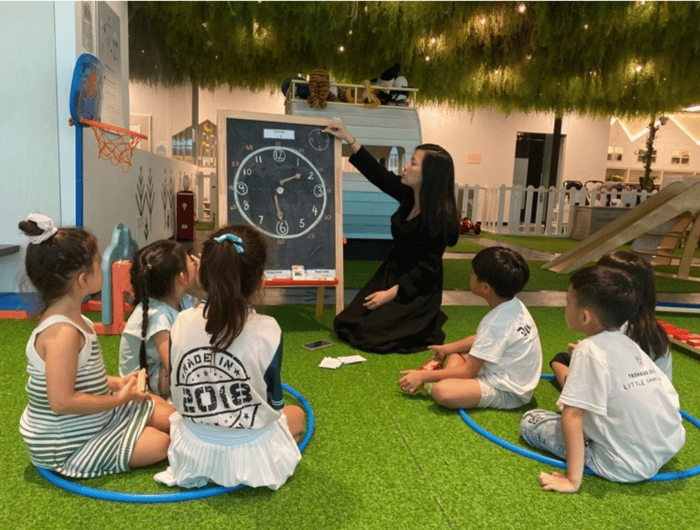
There is a shift happening across education systems.
-1.png?width=1402&height=1122&name=image%20(7)-1.png)
.png?width=1920&height=1280&name=image%20(8).png)
.png?width=780&height=439&name=image%20(9).png)
From India’s National Education Policy 2020 to Malaysia’s Kurikulum Prasekolah 2026 (KP2026), schools are being asked to deliver:
- Stronger learning outcomes and competencies
- Child-centered and experiential learning
- 21st century skills like critical thinking and communication
- Clearer assessment and progress tracking
The expectations are clear. The challenge is the execution.
- How do you maintain quality across classrooms?
- How do you track progress meaningfully, not just administratively?
- How do you support teachers without increasing workload?
- How do you adapt to changing curriculum standards while running a sustainable centre?
This is where AI becomes practical, not as a replacement for teachers, but as a way to help schools deliver what is already expected of them.
Webinar Details
Using AI to Meet National Education Standards: From Policy to Practice
18th May 2026
1:00 PM to 3:00 PM (SGT)
Live on Zoom
Who This Is For?
This session is designed for:
- Preschool owners and operators managing multiple classrooms or centres
- School leaders navigating evolving curriculum frameworks and policies
- Curriculum and program leads responsible for consistency and quality
- Educators looking to reduce administrative workload and focus on teaching
What You Will Learn
It is a practical look at how schools are using AI and educational technology to meet national education requirements while supporting teachers.
In this webinar, you will learn:
-
How education policies across regions are shaping expectations for schools
-
How AI can support decision-making using data and improve classroom outcomes
-
How to track developmental milestones and progress more effectively
-
How to maintain instructional quality and consistency across classrooms
-
How to reduce lesson planning, documentation, and reporting time for teachers
-
How structured tools, data systems, and teacher training make implementation sustainable
How This Looks in Practice
- Teachers spend less time on repetitive planning and reporting
- Schools gain clearer visibility into student progress and learning competencies
- Leaders are able to make better decisions using real data and insights, not guesswork
- Classrooms stay aligned with curriculum standards without constant manual effort
- Curriculum-aligned, project-based and inquiry-driven lesson planning
- Built-in tools for assessment, observation, and progress tracking
- AI-supported recommendations that reduce administrative workload
Schools meet their goals more effectively.
Reserve Your Spot
If you are navigating changing education standards, exploring how to use AI in a meaningful way, or looking for ways to support your teachers without adding pressure, this session will give you a clear starting point.
Speakers


Dr Elaine Kim
Co-founder & CEO, Trehaus
Prior to taking the helm at Trehaus, she was the CEO of CRIB, a social enterprise she co-founded to empower women to become successful entrepreneurs through networking, co-founder and investor/start-up matching and training and equipping of female founders.
After a decade as a doctor caring for terminally ill patients, she continues her involvement in palliative care through her work with the Singapore Ministry of Health Ageing Planning Office and remains involved in various charitable causes, especially through the philanthropic arm CRIB Gives Back that she launched at the helm of CRIB.
Elaine is a World Economic Forum Young Global Leader (WEF YGL) , a member of the International Women’s Forum (IWF) and actively involved in the Young Presidents Organisation (YPO). She is married to venture capitalist John Kim of Amasia VC and they have 4 young children.


Elizabeth Wu
Co-founder & COO, Trehaus
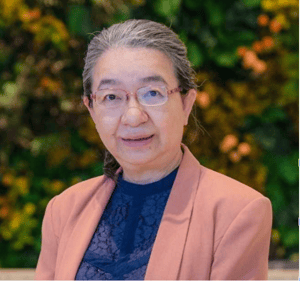

Carolyn M. Choo
Head of Education, SEGi & President of ECCE Council


Bilal Ahmad
Co-Founder and Director
Central School International, Pakistan